Friends as Business Partners

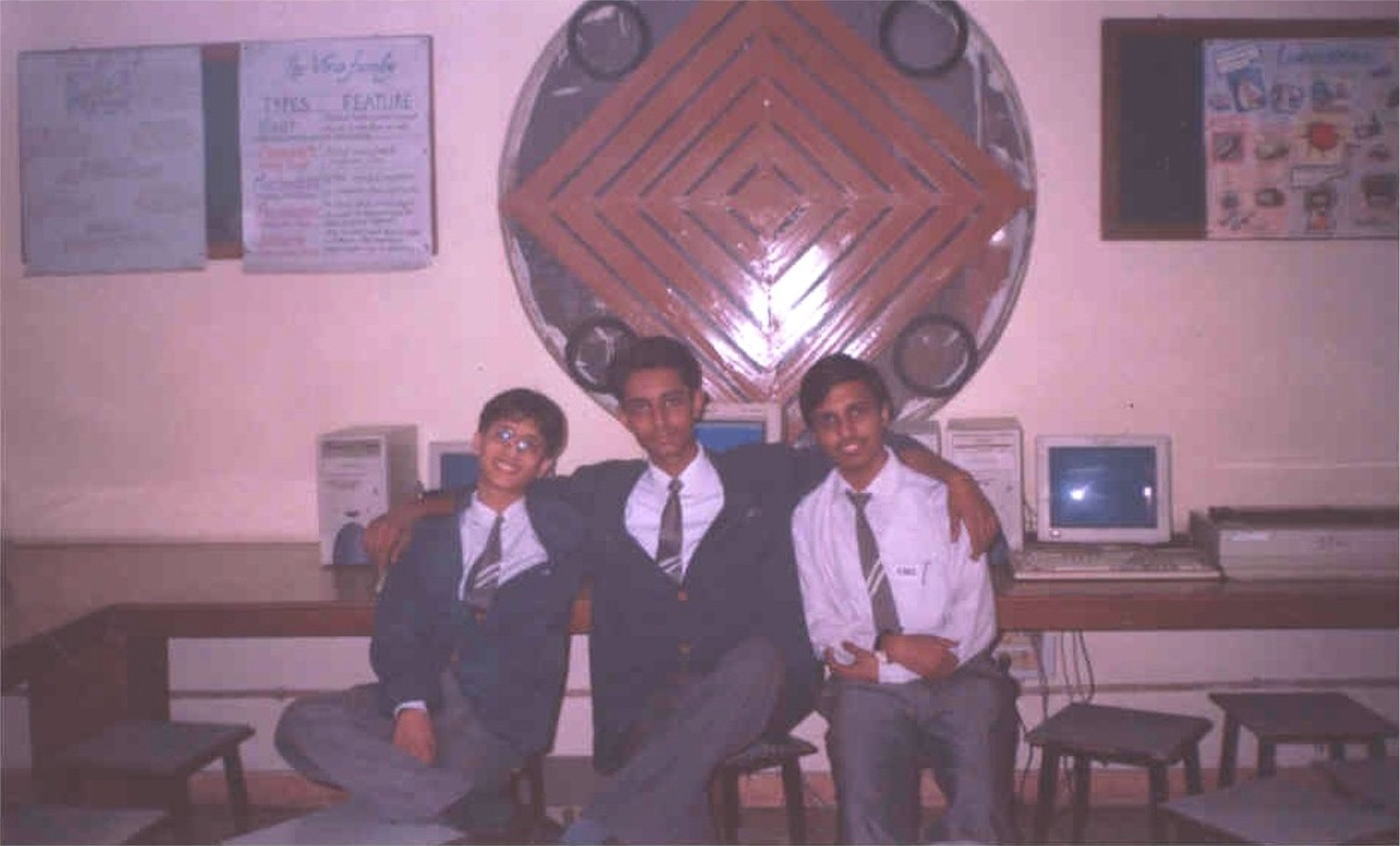
The 3 of us in school in 2001

The 3 of us during school in 2001

I am a big fan of quotes and one liners, but it took me experience to believe in the truth of this quote by John D. Rockefeller – “A friendship founded on business is better than a business founded on friendship“. Now I can verify that. I started SaleRaja with 2 of my closest buddies from school whom I have known for over 10 years. It looked like a perfect match then, but I was to realize later that while it is important to have somebody trustworthy as your partner, friendships often carry other baggage which can create problems, particularly when the business is in trouble or growing well.

We ended up parting ways soon, as our vision for our personal future and the future for SaleRaja did not align. It was a perfect case of both sides being right but the situation being wrong. We were the right people in the wrong place. We did not share the same vision for the business. We always thought that since we were so good friends, we would always find a mutually agreeable path in case of conflicts.

We could not have been more wrong. There were times we ended up accepting what the other said as a “friendship compromise“, and not as a “business decision“. And then there were the tough times, when we decided to part ways. We are still friends, but it is, and will never be, the same. Now if I see friends who want to start a business together, I say to them that they have to be prepared for the fact that their friendship might not be the same in a couple of years time.

I think you need to friends with your partners to run a successful business. It is a necessary condition in my opinion, but not sufficient in itself. Having said that, there are always examples of friends running successful businesses. It is important to emphasize on the balance between business and friendship. Friends should always communicate in all matters, even if they feel that as friends, there can’t be a conflict between them. They should decide specific roles for themselves, see whether they compliment each other in the skills needed to run the business, and most importantly they should know when to switch on and off being friends and business partners.

What about me? Will I again start a business? Certainly YES 🙂 But will I start a business again with friends. I am not saying a complete NO here, but I will evaluate a lot more before jumping in this time. Some of the points where founding partners of any business needs to be aligned are –
• Do they share the same values and how do you expect them to play in day-to-day business activities?
• Do they share the same vision for the business?
• Are your work habits and work ethics in line to co-exist?
• How much money will you put into the business and how much do you expect to get out of it?
• What Roles will each of you play in the company? Who will be the CEO/Leader?
• What if one of you gets married and decide to move away?
• How will you treat your employees, customers, investors, etc?

There are certainly other question you need to ask apart from those listed above. But the most important question I would ask myself would be – Am I ready to accept the fact that this person might not be my friend in another couple of years? If the answer is NO, I will know what to do. In his book “The Greatness Guide”, Robin Sharma has rightly pointed out that at your funeral, you don’t see you business partners crying, it is your friends and family who will cry over your grave. A Point Well Made!!

Racism, in Australia and in India

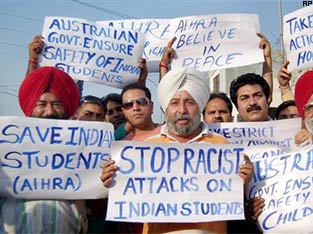
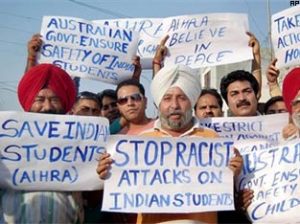
Indians Protesting Racism in Australia

News in media leading to protests

It has been almost a year now since the Indian media has been blasting Australians for racial attacks on Indians down under. After all, it makes for good news which people watch. And who cares for the facts!! It it sells, then show it on prime-time TV or make it front page news… and people will watch too. But do we try to wait and understand what actually is Racism, and is it racism what is happening in Australia?

Racism is defined as “any discrimination or prejudice based on race“. Going by this definition of racism, is it not racism when political parties like MNS and Shiv Sena protests, most of the times violently, against North Indians? Is it not racism when we have reservations for certain “backward” classes for the last 60 years? Is it not racism when we have many temples in our country where non-Hindus are not allowed? In the Sabarimala Shrine in Kerala, women between the age 6-60 are not allowed inside. There are even some shrines where men are not allowed.

Dalits, who represent 16 percent of India’s 1.1 billion population are often beaten or killed for using a well or worshipping at a temple reserved for upper castes. Recently, a temple in Orissa performed purification (washing of temple floors and throwing away holy offerings) because a minister from a lower caste visited the temple. Former Prime Minister Indira Gandhi was also not allowed entry in the famous Jagannath Temple of Puri because she had married a Parsi and become an outcast.

Now, the question to ask is “Is this not racism?“. We are discriminating people of our own country based on caste, subcaste, sex or the state they belong to. India is a secular country and the caste system is long gone, but there are frequent reports of villagers torching two lovers because they eloped / married out of their caste. The North East population have always complained of being treated like non-Indians in their own country. Why is Indian media silent on this? Why is there so much noise and hoopla about what is happening in Australia?

The problem with Indian media is it is driven by politics and money. Blaming Australia is easy because they can’t hit back. And everybody can blame Australia easily it provides for good dinner talk. In short, it sells!! Media has enormous power to shape perceptions and stories on crime, corruption, terrorism usually dominate news channels, which are more than 70 in number and in more than 10 languages. We all have friends, relatives living in Australia and if you ever ask them, they will always describe Australians as very sweet and polite people. Australian authorities have expressed their concern at Indian media publishing stories without justifying the facts. They have maintained that all the attacks are not racial in nature. But do we care? Does facts really matter in front of TRP ratings???

I would say it is time for some self-introspection before pointing fingers at others. And it is high time the government controls the media for publishing mindless stories without justifying facts. I have always believed that Media is the fourth pillar of a democratic country after Judiciary, Executive and Legislative and an irresponsible media can hurt a lot. There are enough genuine stories to cover in our country to cover. News channels should cover and show stories of hope, inspiration, knowledge rather than crime, greed, corruption. Media can shape the public opinion and influence politics.

And as with everything powerful, I am always reminded of the quote from the movie Spiderman“With great powers, come great responsibility!!”

It has been almost a year now since the Indian media has been blasting Australians for racial attacks on Indians down under. After all, it makes for good news which people watch. And who cares for the facts!! It it sells, then show it on prime-time TV or make it front page news… and people will watch too. But do we try to wait and understand what actually is Racism, and is it racism what is happening in Australia?

Racism is defined as “any discrimination or prejudice based on race”. Going by this definition of racism, is it not racism when political parties like MNS and Shiv Sena protests, most of the times violently, against North Indians? Is it not racism when we have reservations for certain “backward” classes for the last 60 years? Is it not racism when we have many temples in our country where non-Hindus are not allowed? In the Sabarimala Shrine in Kerala, women between the age 6-60 are not allowed inside. There are even some shrines where men are not allowed.

Dalits, who represent 16 percent of India’s 1.1 billion population are often beaten or killed for using a well or worshipping at a temple reserved for upper castes. Recently, a temple in Orissa performed purification (washing of temple floors and throwing away holy offerings) because a minister from a lower caste visited the temple. Former Prime Minister Indira Gandhi was also not allowed entry in the famous Jagannath Temple of Puri because she had married a Parsi and become an outcast.

Now, the question to ask is “Is this not racism?”. We are discriminating people of our own country based on caste, subcaste, sex or the state they belong to. India is a secular country and the caste system is long gone, but there are frequent reports of villagers torching two lovers because they eloped / married somebody out of their caste. The North East population have always complained of being treated like non-Indians in their own country. Why is Indian media silent on this? Why is there so much noise and hoopla about what is happening in Australia?

The problem with Indian media is it is driven by politics and money. Blaming Australia is easy because they can’t hit back. And everybody can blame Australia easily it provides for good dinner talk. In short, it sells!! Media has enormous power to shape perceptions and stories on crime, corruption, terrorism usually dominate news channels, which are more than 70 in number and in more than 10 languages. We all have friends, relatives living in Australia and if you ever ask them, they will always describe Australians as very sweet and polite people. Australian authorities have expressed their concern at Indian media publishing stories without justifying the facts. They have maintained that all the attacks are not racial in nature. But do we care? Does facts really matter in front of TRP ratings???

I would say it is time for some self-introspection before pointing fingers at others. And it is high time the government controls the media for publishing mindless stories without justifying facts. I have always believed that Media is the fourth pillar of a democratic country after Judiciary, Executive and Legislative and an irresponsible media can hurt a lot. There are enough genuine stories to cover in our country to cover. News channels should cover and show stories of hope, inspiration, knowledge rather than crime, greed, corruption. Media can shape the public opinion and influence politics.

And as with everything powerful, I am always reminded of the quote from the movie Spiderman  – “With great powers, come great responsibility!!”

Pak Players, IPL 2010 and the Politics of Cricket

It is often said that politics and sports should not be mixed. I have heard this a lot during the last two decades in terms of Indo-Pak relations and cricket. Needless to say, Indo-Pak relations are not exactly like bread and butter after the 26/11 attacks in Mumbai. Pakistan players were not allowed by the Pak government for IPL 2009, nor would Indian government have given them issues if Pak government would have allowed them.

Coming to IPL, it is big money and no player would want to miss it, whatever the reasons given. So when the auction for 2010 IPL was announced, Pak players wanted to be a part of it. After getting clearances from their government and as per expressed shown by IPL franchisee teams, 11 Pakistan players were included for the auction. The list included big-ticket players like Shahid Afridi, Sohail Tanvir, Mohammad Aamer, Umar Gul and Umar Akmal. Many of them were part of the world cup winning Pak squad and Afridi was the top runner for the most-expensive bid this time.

But what happened at the auction surprised one and all. There were no takers for the Pakistani players and they were not touched by any of the franchisees. It was a total embarrassment for Pak players in the auction. The franchisees explained it on grounds of cricketing strategy or availability during the tournament, but interestingly, for a player to be included in the auction, he had to be supported by at least one team.

All the franchisees were unanimous in their approach at the bidding process. Something happened during the two weeks preceding the auction that changed their minds. Some are saying the govt refused to give a guarantee to issue their visas. There were intelligence reports of more attacks and in the case of an attack, nobody would have predicted the outcome. But certainly the whole thing could have been handled better. Players are professional sportsmen and they deserve their dignity and self-respect. Shahid Afridi termed it as a big “insult” to the players and their country by India.

Some people are justifying the decision by saying they deserve to be treated like that, after what happened in Mumbai in Nov 2008. Sure it still hurts in every Indian’s heart thinking about the attacks of 26/11. But one should not get emotional and take every decision with reason. Especially when it involved relations between two neighbors. Pak players are not terrorists and everybody knows that. People might not love them because they are Pakistani’s is an acceptable fact and if you don’t want them to play in your country, don’t invite them. But inviting them and disgracing  them is certainly not sports. It’s politics. And it’s bad. Think how would we have reacted if something like this has happened to players like Sachin, Sehwag, Dhoni, etc…

Mahatma Gandhi once said, “An eye for an eye will make the whole world blind”. One bad act cannot justify another bad act. Mixing politics with sports will not only harm the relations between the two nations, it will also create unnecessary tension between players who only want to play cricket. Already there are talks in Pakistan to ban Hindi movies and anti-India protests have started. A small issue not handled well could create unnecessary tension between the two countries. And it not help anyone. It will give fuel and reason to terror outfits to strike again.

Instead of stopping Pak players from playing in the IPL, it is more important to make our borders strong and impossible to penetrate. Still we are running buses and trains between the two countries. If that is ok, how can Pakistan players playing under total security could be a problem? In the end, the cricket fan in Pakistan is confused, heartbroken and angry. Cricket fans in India will not be able to see the World T20 Champions playing in their country. And nobody can guess how long the controversy will continue in political circles!!!

How much do we know about our country?

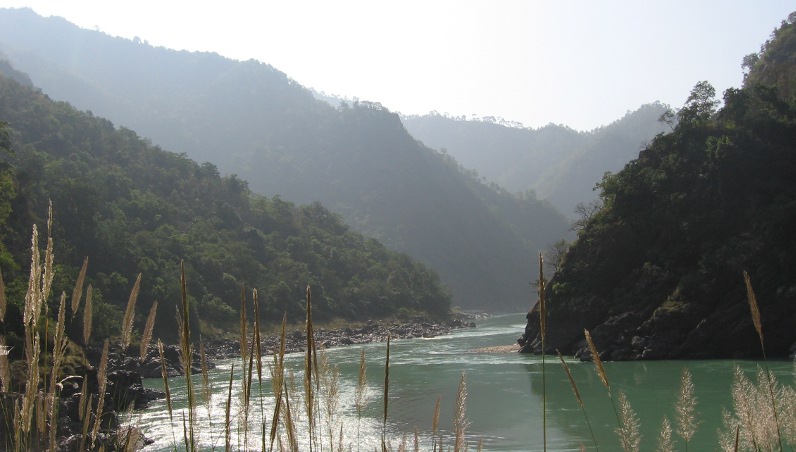
Himalayan Ranges in Rishikesh

Himalayan Ranges in Rishikesh

I went to a camping trip with a few of my friends. I asked one of my Keralite friend about his native city, he told me about a place in Kerala I had no idea about. Then some time later he asked me whether I had been to any camping trips before. I told him I had been to Rishikesh, and he talked about the Shivling made from ice. He was mistaking Rishikesh for Amarnath. This incident illustrates clearly how vast is this country and how much do we really know about places and people of our own country.

In the north, we have the mighty Himalayas. We have tourist places such as Ladakh, the Kashmir Valley, Shimla, Manali, Dharamsala and so on. We have pilgrimage centres like Vaishno Devi and Amarnath Shrine. Millions of devotees throng to these places every year. Kashmir’s beauty is so amazing it is called the heaven on earth. In the Kumaon and Garhwal ranges of Uttaranchal, we have holy places like Gangotri, Yamnotri, Kedarnath and Badrinath. In the east, we have the fully mountainous state of Sikkim and Buddhist monasteries there are a major attraction. Further east, we have the pristine beauty of Arunachal Pradesh with its lush green forests and deep river valleys.

In the plains, we have the fertile lands of Punjab, Haryana and Uttar Pradesh. Punjab is the land of 5 rivers while Ganga and Yamuna flows through the rest of the plains. In Punjab, you have the Golden Temple in the city of Amritsar. We have the historic capital city of Delhi in the plains with its famous Qutub Minar and Red Fort. In Uttar Pradesh, we have the royal city of Lucknow and the Taj Mahal in Agra is a destination many Westerners associate India with.

In the west, we have the majestic state of Rajasthan, with its forts and palaces. Its rich heritage, colorful culture, deserts, forests and varied wildlife make it a state non-parallel. There are tourist destinations like Jodhpur, Jaipur, Ajmer, Jaisalmer, Udaipir and Mount Abu with the Aravallis, India’s oldest mountain range as the backdrop. South of Rajasthan, we have the historic state of Gujarat. Art, history, music, culture, all combine with each other to form a wondrous matrix that is the cultural exuberance of the people of Gujarat. The states of Madhya Pradesh, Bihar, Jharkhand, Chattisgarh have seen many a battles between warring armies.

In the east, West Bengal stands tall with its culture, heritage and history. With the Bengali city of Kolkata as its capital, West Bengal is an experience in itself. In the north east, states like Assam, Meghalaya, Mizoram, Manipur, Nagaland, Tripura are there with a large number of tribal groups each having its own distinct culture. The dense forests lying in foothills of Himalayan hills are stunning in their natural beauty, and are home to many of wildlife parks including Manas National Park and Kaziranga National Park, which are natural World Heritage Sites. Besides, lovely waterfalls and caves are another beautiful attraction of the North-East.

Go south and you have Maharashtra, Karnataka, Andhra Pradesh, Tamil Nadu and Kerala. All these states have their different language, culture, food and have everything for tourists ranging from backwaters to beaches to pilgrim centres to hills…. The beaches of Goa or Kerala are there, you have pilgrim centers like Tirupati and Madurai, you have hill stations like Munnar and Ooty, you have the backwaters of Kerala. Within these states, there are 5 languages spoken and the food in all the places have its own characteristic features. India’s highest waterfalls are in Karnataka and we have the most richest and most visited place of worship in the world at Tirupati in Andhra Pradesh.

I would consider my life to be well-lived if I travel the length and breadth of this country in my lifetime..

Bandipur Ride

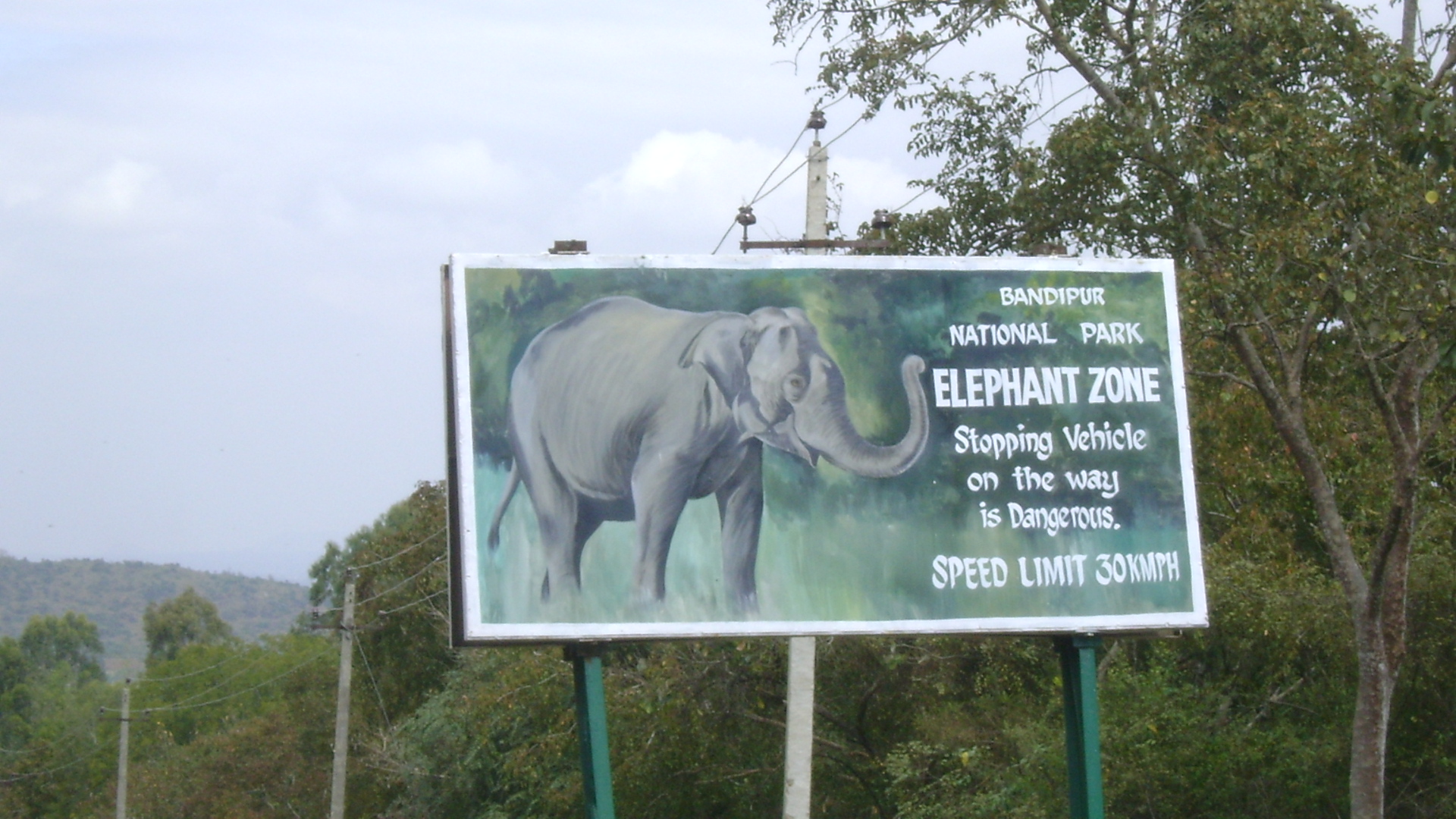
Bandipur National Park

Bandipur National Park

Murphy’s Law proved itself to me on two consecutive weekends. First, the plan to ride to Pondicherry with some friends on the Christmas 2009 weekend was cancelled at the last moment. Then, a ride to Lepakshi on 3 Jan with the Royal Indians club started off badly with the clutch cable giving up as soon as I started. So the ride to Bandipur on 9th-10th Jan was awaited with much enthusiasm.

We were 4 of us on two bikes, my Thunderbird TwinSpark and one Yamaha. Bandipur is a widlife sanctuary about 220 km from Bangalore. Just after you cross Bandipur, you get into Mudumalai Tiger Reserve which falls in Tamil Nadu. We got two tents for the one night stay near Gudalur, around 15km after Mudumulai Reserve on the way to Ooty.

We planned to start at 6am on 9th January, and finally started at 6:30am. We took the Mysore Road out of Bangalore and after the initial city traffic, we were cruising at around 80km/hr. We took a break at 8:10 am for tea after around 60km. We left again at 8:25am towards Mysore. The highway towards Mysore (state highway 17) was excellent and we reached Mysore at 10:10 am. The trip meter read 160km. We stopped for breakfast for 30 mins in Mysore.

After Mysore, Bandipur was another 85km and our camp was another 25km from there. We took the road to Ooty out of Mysore. After crossing Nanjangud and Gundulpet, we took a halt for 15 min just before Bandipur at 11:45am. The road after Mysore was not as smooth as the Bangalore-Mysore road, but was still pretty good. Near Bandipur, the road was patchy at places and road construction work was going on at some stretches. We started once again at 12 noon and reached the camp at 1:15 pm. It was 270kms done.

After doing our lunch, we booked a night safari into Mudumalai in the evening, chilled out in the camp, went by riverside nearby and took some rest. In the evening, we got some drinks / snacks for the night. Our jeep for the night safari was ready at 7pm. Soon we were into Mudumalai Tiger Reserve. Very soon, a tusker was waiting for us at the road side. Our jeep driver ensured we got a good look at the elephant. He turned the jeep towards it with the headlights pointed at its eyes. Basically, he scared the poor animal away. So much for the poor animal. We continued ahead but it looked like other animals were too scared to wander near the roads. We returned after a disappointing 1 hour night safari at the camp. Had our dinner and drinks and retired for the day.

Woke up at 6 next morning, got ready and left for Mudumalai on our bikes for a van safari. The Van safari took us on a beaten path and we managed to see deer, elephants and peacocks on the way. We came back to the camp after that. After breakfast, it was time for checkout at 10:00am. We decided to go uphill to Gudalur town to get some Chambala Tea which had a factory nearby. Thereafter we left back for Bangalore through Mudumalai and Bandipur.

Going through the jungle on our way back, we weren’t expecting much. But as soon as we entered Mudumalai, we saw a massive Bison by the roadside. Some cars were already stopped there taking snaps. We took the snaps and continued on our journey. Soon we entered Karnataka and were into Bandipur. We were for a surprise. As I rode through Bandipur, I saw two elephants, a mother and baby elephant duo, by the roadside. I slowed down the bike in the hope of catching a few snaps. But, to my utter surprise, as soon as I slowed down the bike, the mother elephant started chasing our bike. I never an elephant could run so fast. As it chased us, dust / mud flew up as a heavy truck has passed through there. I was startled and accelerated. But in the process of slowing down, I had taken the bike off the road into the gravel sideby. I could see the elephant getting nearer in the rear view mirror. Soon the bike was on the road again, we zoomed off the tusker faded in the rear view mirror. There were moments of panic when my bike slid into the gravel and luckily we didn’t skidded off. In the end, my bull was chased by an elephant but it was a good enough experience.

Continuing from there, we took a break at Mysore for lunch and two more breaks after that to ease our asses which were now beginning to ache. We continued travelling after that and reached our homes back at 5:30 pm. The trip meter read 580km over 2 days. In all, it was a good ride, riding a bike through the jungle was fun and getting chased by an elephant was the icing on the cake. After reaching home, we put our tired asses to rest. Rest till the next ride comes calling!!